Beyond the bin: the real story of packaging waste
Written by Claire Barker, Chilli's Senior Account Manager for FMCG brands, with over 25 years of packaging experience.
Right now, the packaging world is running a massive, global materials experiment.
Here in the UK, we're projected to generate roughly 12 million tonnes of packaging waste by the end of 2026!!
We are currently watching a complete reinvention of how goods are protected, shipped and consumed. Driven by strict plastic bans, carbon reduction targets and consumer backlash, companies are moving past traditional plastics into unproven, massive-scale alternatives.
With UK homes throwing away roughly 1.6 billion pieces of plastic packaging every single week and food and drink packaging making up 82% of all household plastic waste, this is an area we at Chilli are particularly interested in supporting.
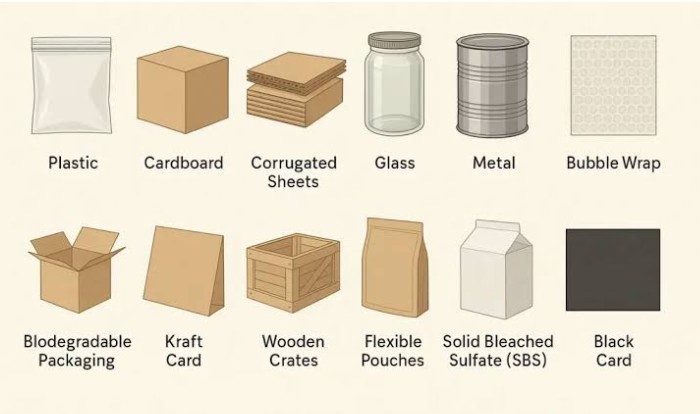
While public attention often fixates on things like plastic straws or carrier bags, the real story of packaging waste comes down to pack format - the specific combination of materials, shapes and layers we use to protect a product.
Ultimately, a package's format dictates whether it gets to live a glorious second life as something brand new, gets downcycled into a humble park bench or ends up sitting around in landfill for the next few centuries!
I've put together a handy breakdown below of how different packaging formats contribute to, or help us tackle, the global waste crisis.
Grab a cuppa and take a look!
From gold standard to landfill
It's worth remembering that not all waste is created
equal. The actual environmental impact of any packaging format really comes down to its intrinsic material value and how easily our recycling infrastructure can process and reuse it.
1. Metal and glass
Metals and glass are really the gold standard for sustainability because they don't lose quality during recycling. A crushed aluminium can or smashed glass jar can be melted down and remade indefinitely.
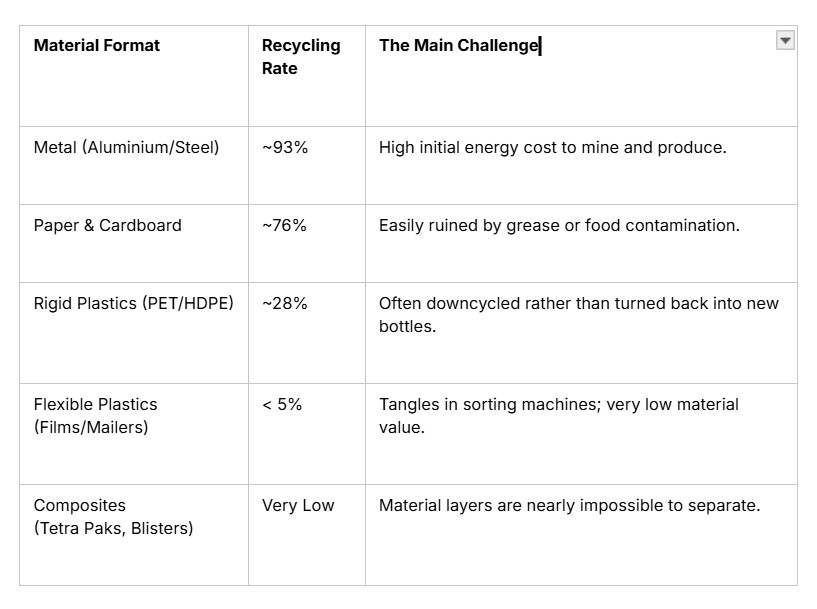
The reality: Metal packaging leads the way with an incredible 93% recycling rate! Even better, recycling aluminium uses 95% less energy than producing it from scratch, giving us a lasting reason to keep recovering it. Following close behind, around 70 to 75% of glass packaging waste is successfully recycled.
2. Paper and Corrugated Cardboard
Fibre-based packaging makes up the largest sheer volume of global packaging waste - in fact, it accounts for a staggering 40%+ of all packaging waste here in the UK.
The reality: Despite those huge volumes, paper and cardboard are a massive success story! They achieve a solid recycling rate of around 76%. The catch? Paper fibres get a bit tired and shorten each time they're recycled, so a tiny bit of virgin pulp does eventually need to join the party to keep things sturdy.
3. Plastics
Plastic is lightweight, tough as nails, and wonderfully cost-effective… traits that make it fantastic for shipping, but a total headache for waste management.
The format of the plastic makes all the difference to where it ultimately ends up.
Rigid Plastics: Clear PET (like water bottles) and HDPE (like milk cartons) have established recycling streams and decent recovery rates (around 28%), largely thanks to modern, super-clean mechanical recycling facilities.
Flexible Plastics: Formats like poly mailers, crisp packets and shrink film are far trickier for facilities to handle. In the UK, the recycling rate for standard poly mailer materials (LDPE) sits at a dismal <5%, meaning the vast majority, sadly, heads straight for landfill or the incinerator.
In the UK, the Plastic Packaging Tax (PPT) acts as a nudge to industry, charging a levy on finished plastic packaging manufactured in or imported into the UK that contains less than 30% recycled plastic.
The encouraging news? Official data shows 51% of manufactured plastic has already hit or beaten that 30% recycled content threshold, proving that positive change is very much happening.
4. Composites and Multi-Materials
Many modern packs try to play matchmaker by layering different materials together to extend shelf life or add extra protection. Think multi-layer pouches, Tetra Paks (paper lined with plastic and aluminium), and blister packs (plastic bonded to foil).
The reality: Automated sorting facilities can't easily peel apart those microscopic layers of foil, paper and plastic. Consequently, recycling rates stay rock-bottom and these formats almost always end up taking a one-way trip to landfill!
The shift to smarter, greener packaging
To help tackle the waste crisis, our industry is making great strides away from complex formats toward designs built for a true sustainable economy:
- Embracing single-material designs: We're seeing more brands redesign multi-layer pouches to rely on a single polymer type. While mono-materials might slightly impact shelf life, they can be processed by standard recycling facilities without issue.
- Paper adoption: Companies are actively swapping out plastic formats for fibre wherever possible - such as using moulded pulp inserts instead of styrofoam, or introducing fibre-based screw caps.
- Extended Producer Responsibility (EPR): New regulations came into effect across the UK in April 2025. This will financially penalise brands that design non-recyclable packaging, ensuring businesses fund the end-of-life cleanup for their chosen formats. It will affect any UK business handling, using, importing or supplying packaging.
How creative agencies can drive change
Navigating the transition to sustainable packaging is all about balancing structural protection, brand aesthetics and regulatory requirements. Creative agencies play a crucial role in helping FMCG brands step away from problem formats by re-thinking packaging design right from the drawing board.
Whether it's championing mono-material structures, trimming unnecessary excess layers, or gearing up for EPR compliance, experienced agency teams bridge the gap between technical packaging demands and irresistible shelf appeal.
By partnering with an experienced packaging design agency like Chilli, FMCG brands can confidently navigate these sustainability challenges and create packaging solutions that protect both the product and the planet.
So, if you need help navigating your packaging requirements both creatively and technically, then we’d love to start a conversation with you here at Chilli HQ!